End-of-Line Test Systems for Electric Seat Drives
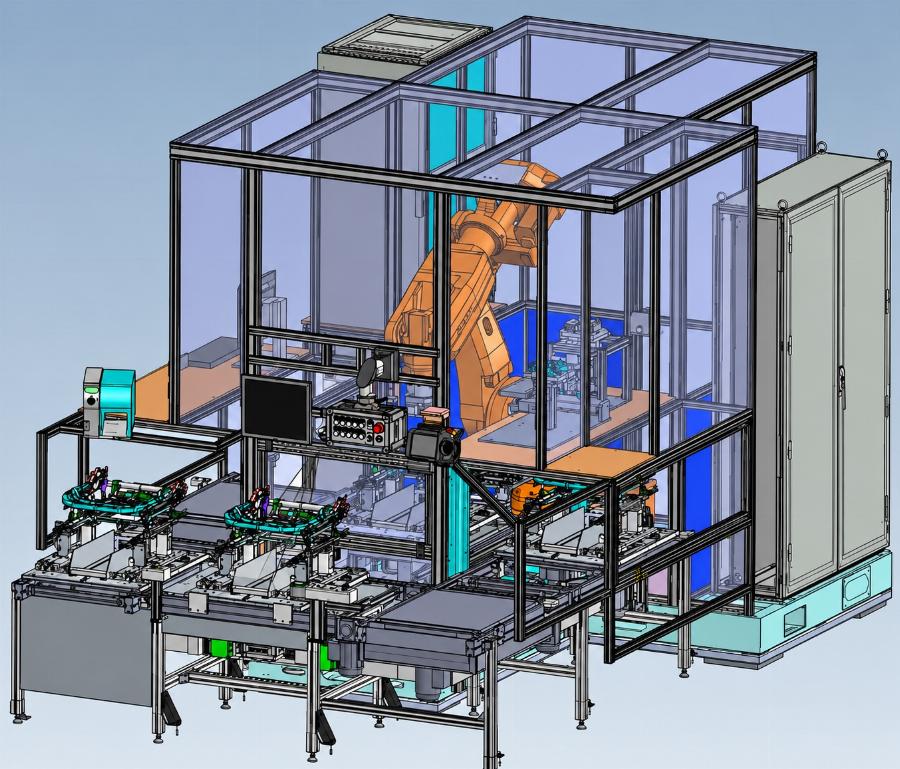
Final Testing of Functionality, Acoustics and Traceability
Two end-of-line testers are designed for a new assembly line. The solution reliably verifies the functionality of electric seat drives and stores key product test parameters in an internal MES database.
How the Testing Process Works
Loading and Identification
The operator places the part into the fixture on the test pallet and connects all electric motors in the seat. The product's DMX code is then scanned, and the data is written to the pallet's RFID chip.
Break-in and Initial Testing
In the break-in position, all adjusters are activated. Functionality is verified by counting Hall pulses, while a short-circuit test is performed simultaneously.
Robotic Load Testing
The next stage takes place in a robotic cell equipped with an ABB IRB6620-150 robot. The robot simulates the load on the seat, while noise levels and the drives' electrical parameters are measured during movement.
Acoustic Testing, Labeling and Final Output
The ANOVIS acoustic system inspects the tested mechanism. At the output station, once the carrier has stopped, a label is printed automatically and applied to the finished part by the operator.
Key Benefits of the Solution
- Comprehensive EOL testing of electric drives in car seats
- Functionality verification using Hall pulses and short-circuit testing
- Robotic simulation of seat loading during testing
- Measurement of electrical parameters during movement
- Acoustic inspection using the ANOVIS system
- RFID identification of the test pallet
- Storage of key parameters in the MES traceability system
- Bosch Rexroth TS2+ conveyor system
- SIEMENS ET200SP Safety PLC
- Automatic printing of the final product label
- Set of interchangeable testing tools